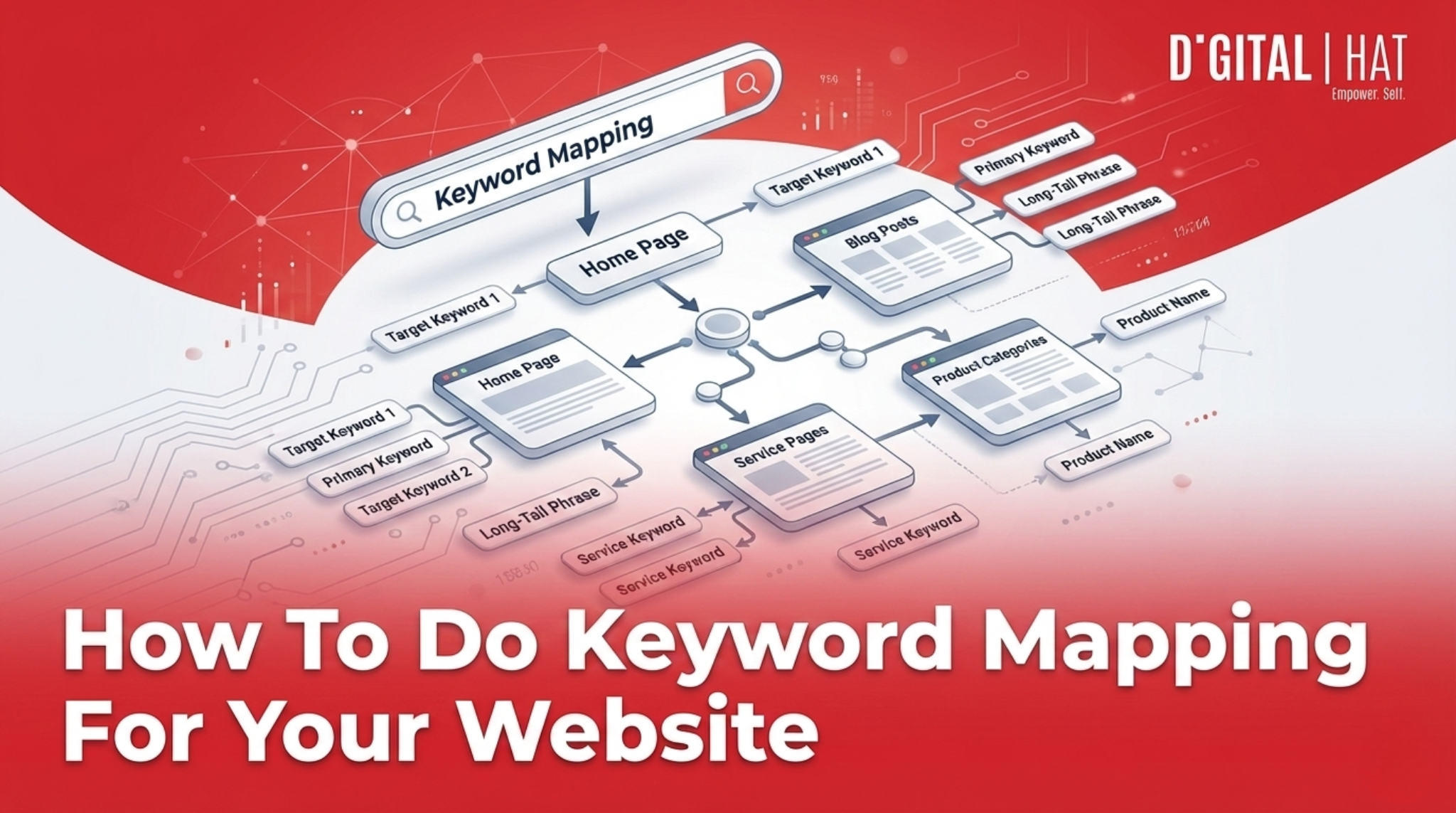
In modern SEO, success is no longer driven by randomly choosing keywords and placing them across your website. Search engines have become smarter, and they now prioritize relevance, structure, and user intent. This is where understanding How to Do Keyword Mapping For Your Website becomes critical. Keyword mapping helps you align the right keywords with the right pages, ensuring your website communicates clearly with search engines while delivering value to users.
At Digital Hat, we consider keyword mapping the backbone of every successful SEO strategy. Without it, even high-quality content struggles to rank consistently.
What is Keyword Mapping And How it Impacts SEO
Keyword mapping is the strategic process of assigning specific keywords or keyword groups to individual pages on your website. Instead of multiple pages competing for the same keyword, each page targets a unique search intent. When you master How to Do Keyword Mapping For Your Website, you create a clean SEO structure that improves rankings, enhances user experience, and increases conversion potential.
Search engines rely on clarity. When your website has well-mapped keywords, Google understands exactly which page to rank for which search query. This reduces keyword cannibalization and strengthens your site’s topical authority.
Why Keyword Mapping is Essential For Website Growth
Learning How to Do Keyword Mapping For Your Website is essential because it transforms your website from a collection of pages into a strategically organized digital asset. Keyword mapping ensures that every page serves a defined purpose, whether it is attracting traffic, generating leads, or driving sales.
From a business perspective, keyword mapping improves ROI by attracting high-intent visitors. From an SEO perspective, it helps search engines crawl, index, and rank your pages more efficiently. At Digital Hat, we use keyword mapping to connect content with business goals, ensuring long-term growth rather than short-term traffic spikes.
How to Do Keyword Mapping For Your Website Step By Step
Understanding Your Website Structure And Goals
Before beginning keyword mapping, it is important to understand your website’s structure and objectives. Every website has different goals-some focus on lead generation, others on sales, branding, or education. To properly execute How to Do Keyword Mapping For Your Website, you must first identify all existing pages such as home pages, service pages, category pages, blogs, and landing pages.
Once the pages are identified, define the role each page plays in the customer journey. This clarity helps ensure that keywords are mapped based on relevance and intent, not just search volume.
Conducting Strategic Keyword Research
Keyword research is the foundation of How to Do Keyword Mapping For Your Website. This process involves identifying keywords that your target audience actively searches for and analyzing their intent, competition, and relevance. Rather than focusing only on high-volume keywords, effective keyword mapping includes long-tail and intent-based keywords that drive qualified traffic.
At Digital Hat, we prioritize keyword research that balances search volume with intent. Informational keywords are mapped to blogs, while transactional keywords are mapped to service or landing pages. This strategic alignment ensures better engagement and improved conversion rates.
Search Intent And It’s Role in Keyword Mapping
Matching Keywords With User Intent
Search intent plays a critical role in How to Do Keyword Mapping For Your Website. Every keyword represents a user’s intention-whether they are seeking information, comparing options, or ready to take action. Ignoring intent can lead to poor rankings and high bounce rates.
For example, a keyword like “what is keyword mapping” is informational and best suited for a blog post, while “keyword mapping services” has commercial intent and should be mapped to a service page. Understanding this distinction ensures that users land on pages that meet their expectations.
Creating Content That Satisfies Search Intent
Once keywords are mapped based on intent, content creation becomes more focused and effective. Pages optimized with intent-driven keywords provide relevant answers, improving dwell time and engagement. When implemented correctly, How to Do Keyword Mapping For Your Website helps your content naturally align with Google’s ranking signals.
This approach also strengthens internal linking, allowing blogs to support service pages and guide users seamlessly through your website.
Optimizing Pages Using Keyword Mapping
After mapping keywords to pages, the next step in How to Do Keyword Mapping For Your Website is on-page optimization. This involves placing mapped keywords naturally within title tags, meta descriptions, headings, URLs, and body content. Consistent optimization reinforces page relevance without keyword stuffing.
Keyword mapping also guides internal linking strategies. When pages are connected using relevant anchor text, search engines better understand content relationships, improving overall site authority. At Digital Hat, we integrate keyword mapping with technical and on-page SEO to maximize performance.
Common Mistakes to Avoid in Keyword Mapping
Many websites fail to see SEO results due to poor keyword mapping practices. One of the most common mistakes is assigning the same keyword to multiple pages, which confuses search engines and weakens rankings. Another mistake is focusing solely on high-volume keywords without considering intent or competition.
Ignoring content updates is another issue. Keyword mapping is not a one-time activity-it requires regular review and refinement. Understanding How to Do Keyword Mapping For Your Website also means knowing when to update old content to match evolving search trends.
Why Digital Hat is The Right Choice For Keyword Mapping
At Digital Hat, we approach keyword mapping as a strategic SEO framework rather than a basic checklist. Our process combines keyword research, intent analysis, content planning, and performance tracking to deliver measurable results. We help businesses build structured websites that rank consistently and convert effectively.
Our expertise in How to Do Keyword Mapping For Your Website ensures that every page contributes to your digital growth, whether you are targeting local, national, or global audiences.
Final Thoughts on How to Do Keyword Mapping For Your Website
Keyword mapping is one of the most powerful yet underutilized SEO techniques. When done correctly, it improves rankings, enhances user experience, and supports long-term business growth. Learning How to Do Keyword Mapping For Your Website gives you control over your content strategy and helps search engines understand your website clearly.
If you want sustainable SEO success, keyword mapping is not optional-it is essential.
Contact Us – Digital Hat For Expert Keyword Mapping Services
FAQS:
Key Topics:
How to Do Keyword Mapping
Keyword Mapping For Website SEO
SEO Keyword Mapping Strategy
Website Keyword Mapping Process
Keyword Mapping For SEO Success
Search Intent Based Keyword Mapping
On Page Keyword Mapping SEO
Content Based Keyword Mapping Strategy
Advanced Keyword Mapping Techniques
Keyword Mapping For Better Rankings