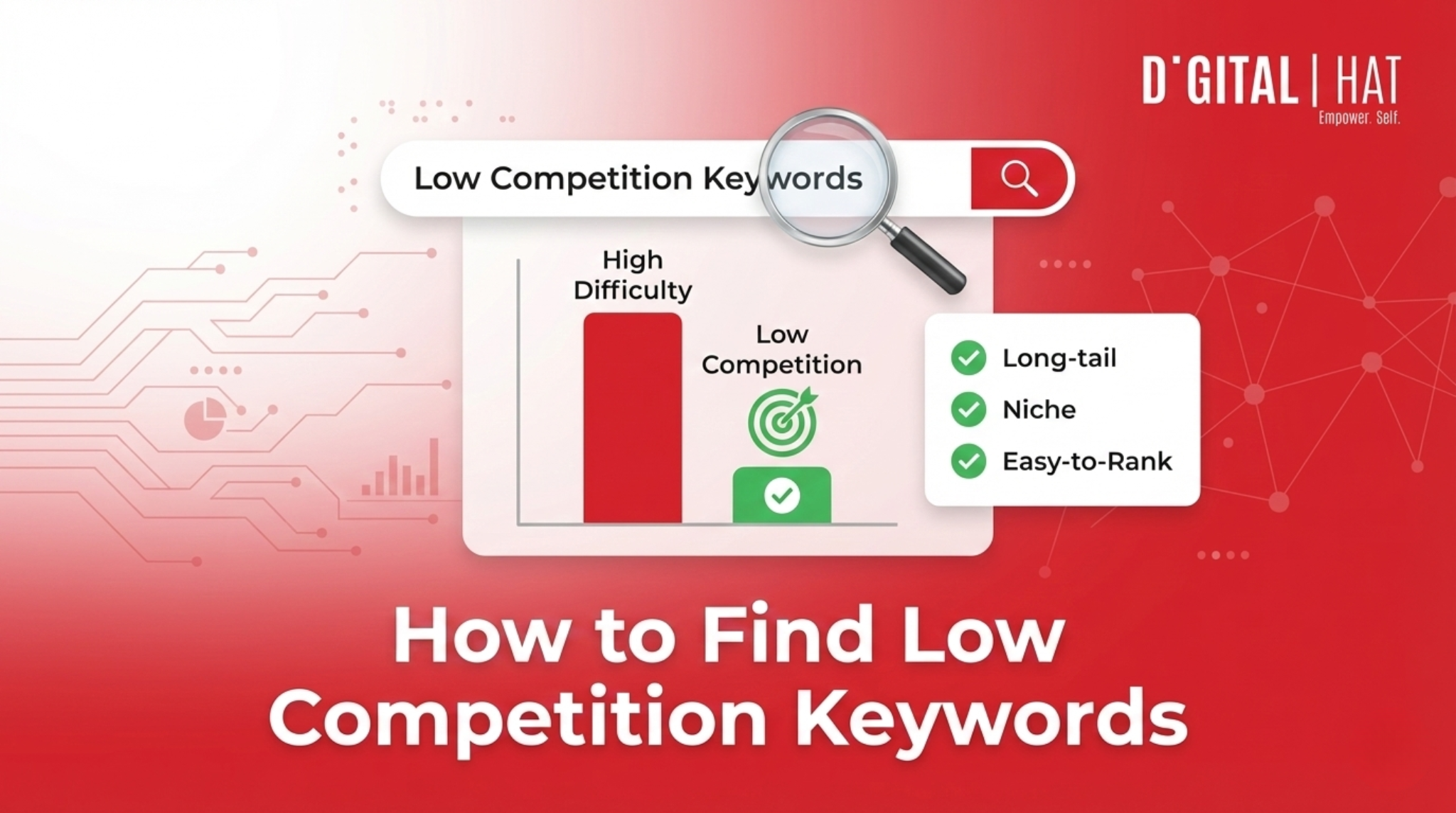
Understanding How to Find Low Competition Keywords is one of the most important skills in SEO today. With increasing online competition, ranking for high-volume keywords has become difficult, especially for new websites and small businesses. Low competition keywords help you rank faster and attract targeted traffic without spending heavily on ads.
At Digital Hat, we focus on smart keyword research strategies that bring consistent organic growth. Low competition keywords allow your content to stand out and reach users who are actively searching for specific solutions.
Key Benefits Include:
- Faster search engine rankings
- Better conversion-focused traffic
- Lower SEO effort with higher ROI
What Are Low Competition Keywords?
Low competition keywords are search terms that have fewer strong websites competing for top rankings. These keywords usually have moderate search volume but high relevance and intent. They are ideal for blogs, service pages, and niche websites.
Unlike broad keywords, low competition keywords target users who know exactly what they want, making them more valuable for SEO and lead generation.
Characteristics of Low Competition Keywords:
- Lower keyword difficulty score
- Specific user intent
- Easier to rank with quality content
Why Low Competition Keywords Are Important For SEO
Using low competition keywords helps websites grow steadily without fighting big brands. They are especially useful for startups, local businesses, and personal blogs.
At Digital Hat, we recommend focusing on these keywords to build authority before targeting competitive terms.
Why They Work Effectively:
- Rank quicker on Google
- Bring highly targeted visitors
- Improve overall domain authority
Understanding Search Intent Before Keyword Research
Before learning How to Find Low Competition Keywords, it is essential to understand search intent. Search intent defines why a user is searching for a particular keyword.
Choosing keywords that match intent improves rankings and user engagement.
Main Types Of Search Intent:
- Informational (learning-based searches)
- Commercial (comparison or service searches)
- Transactional (ready to buy or contact)
Using Google Autocomplete For Low Competition Keywords
Google Autocomplete is one of the easiest and free methods to find low competition keywords. When you type a keyword into Google, it suggests popular searches based on real user data.
These suggestions often include long-tail keywords with low competition.
How to Use It Effectively:
- Type your main keyword and observe suggestions
- Add letters (a–z) after the keyword
- Note question-based and long-tail phrases
Finding Keywords From People Also Ask Section
The “People Also Ask” section shows commonly searched questions related to your keyword. These questions are excellent content ideas and usually have lower competition.
Answering these questions helps your blog rank for multiple keywords at once.
Why People Also Ask is Valuable:
- Shows real user questions
- Helps create FAQ-style content
- Improves topical authority
Using SEO Tools to Find Low Competition Keywords
Search Engine Optimization(SEO) tools help analyze keyword difficulty, competition level, and search volume. Both free and paid tools are useful when used correctly.
At Digital Hat, we use professional tools to identify keywords that provide long-term results.
Popular SEO Tools Include:
- Google Keyword Planner
- Ubersuggest
- Ahrefs or SEMrush
Checking Competitor Content Manually
Manual competitor analysis is a powerful way to identify low competition keywords. If top-ranking pages are weak or outdated, you have a strong chance to outrank them.
Always check the quality of content ranking on page one.
What to Analyze in Competitor Pages:
- Content depth and structure
- Use of headings and keywords
- User experience and readability
Importance of Long-Tail Keywords in Low Competition SEO
Long-tail keywords contain three or more words and are less competitive than short keywords. They attract users who are searching for specific information or services.
These keywords are highly recommended by Digital Hat for blogs and service-based websites.
Advantages of Long-Tail Keywords:
- Lower competition
- Higher conversion rates
- Better user targeting
Local SEO And Low Competition Keywords
Adding location-based terms reduces competition significantly and improves local search visibility. Local keywords are essential for service businesses targeting specific regions.
This strategy works well for clinics, institutes, and agencies.
Local Keyword Benefits:
- Easier local rankings
- Higher inquiry potential
- Better Google Maps visibility
Common Mistakes to Avoid in Low Competition Keyword Research
Many websites fail to rank because of poor keyword selection. Avoiding common mistakes improves SEO performance.
At Digital Hat, we ensure keyword strategies align with business goals.
Mistakes to Avoid:
- Targeting keywords with no search intent
- Ignoring competition analysis
- Focusing only on search volume
How Digital Hat Helps You Fing Low Competition Keywords
Digital Hat provides data-driven keyword research tailored to your industry and audience. We focus on keywords that bring traffic, leads, and sales.
Our approach ensures sustainable SEO growth.
Our Keyword Strategy Includes:
- Competitor gap analysis
- Intent-based keyword selection
- Content optimization planning
Conclusion
Learning How to Find Low Competition Keywords is essential for achieving consistent SEO success. With the right strategy, tools, and execution, even small websites can rank on Google and generate quality traffic.
By focusing on low competition keywords, you build a strong foundation for long-term growth.
Contact Us – Start Your SEO Growth Today
FAQS:
Key Topics:
How to find low competition keywords
Low competition keywords for seo
Low competition keywords for blogs
Find low competition keywords free
Long tail low competition keywords
Low competition keyword research strategy
Low competition keywords for website
Low competition keywords for business
Local low competition keywords seo
Professional low competition keyword research